
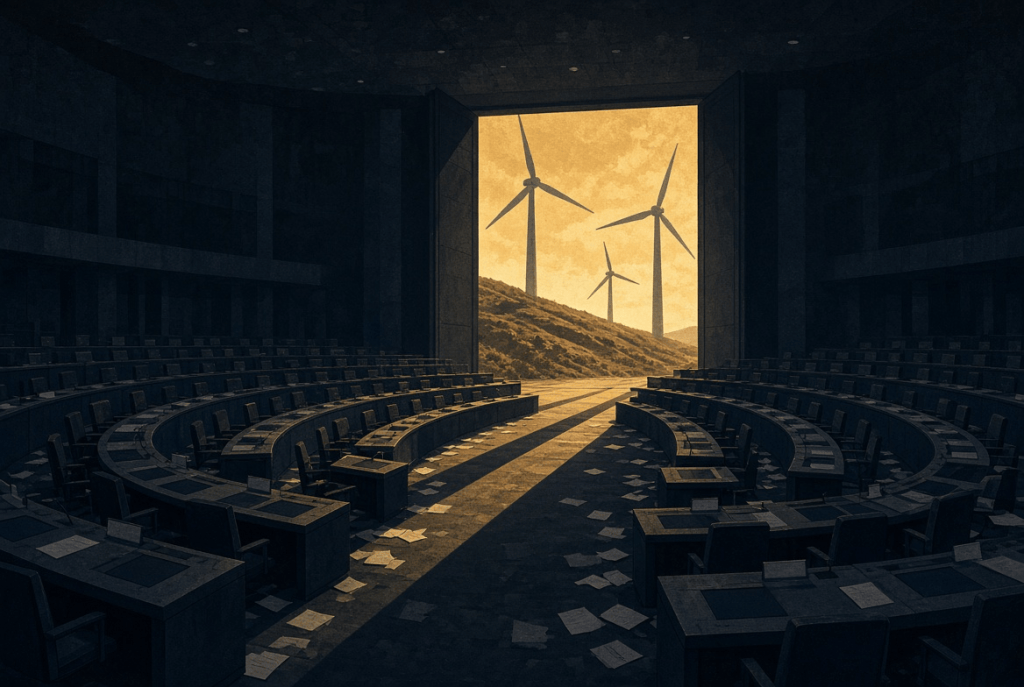
The longest climate summit in history has closed. COP31, which ran two days over, ended without a joint outcome text despite a draft Antalya Pact that was revised three times. According to Reuters, it has been reported as the first summit since Copenhagen in 2009 to close without an overall agreement. As a sector representative from the host country, I think that, rather than squeezing this picture into a debate over “who blocked it”, we need to read it through a broader question: how far has the distance between our goals and our behaviour widened?
What exactly happened in Antalya?
At the centre of the deadlock was the wording on fossil fuels. The draft contented itself with a general reference to the Dubai decision and did not explicitly address the exit from coal, oil and natural gas. The EU found this omission unacceptable and formally objected to the cover decision; Panama, the Marshall Islands, Vanuatu and Norway took the same side. On the other side of the coin were the oil-producing countries, which resisted any wording on fossil fuels entering the text. The fact that, eleven years after the Paris Agreement, we have still not been able to build a common implementation framework for the exit from fossil fuels shows that the deadlock in Antalya is the product not of two weeks but of a decade-long problem.
The picture was similar on the finance side. The framework drawn in Baku envisaged at least USD 300 billion a year flowing to developing countries by 2035, and a broader target of USD 1.3 trillion a year when public and private sources are mobilised together. Antalya added nothing new to these figures; the debate revolved around how promises already made would be implemented. Even in the proposal to triple adaptation finance, the starting year and the calculation baseline remained unclear.
Yet to count the summit as a “zero” would be thoroughly unfair. Decisions on the Adaptation Fund, the Green Climate Fund, the Loss and Damage Fund, the Global Goal on Adaptation and the just transition programme passed through the hall. The “35×35” initiative championed by Türkiye, that is, the target of raising electricity’s share in global final energy consumption from around 23% to 35% by 2035, also received the support of around 100 countries at the close. We need to note, however, that this is not a binding negotiated decision but a voluntary commitment.
Where do we stand on the 2030 goals?
On a day when I felt precisely that reading Antalya on its own would not be enough to see the bigger picture, I had the chance to read the article by Ms Güliz Öztürk, Chair of UN Global Compact Türkiye, in WIRED Türkiye; the figures there were important for seeing the real picture. According to the report the UN published in July, only 36% of the UN’s Sustainable Development Goal targets appear to be on track, 49% are moving too slowly, and 15% have fallen behind their 2015 levels. SDSN’s analysis is even harsher: none of the 17 goals is on course to be met by 2030 and only 16% of the targets are on track. And according to Öztürk, Türkiye ranks 77th among 169 countries.
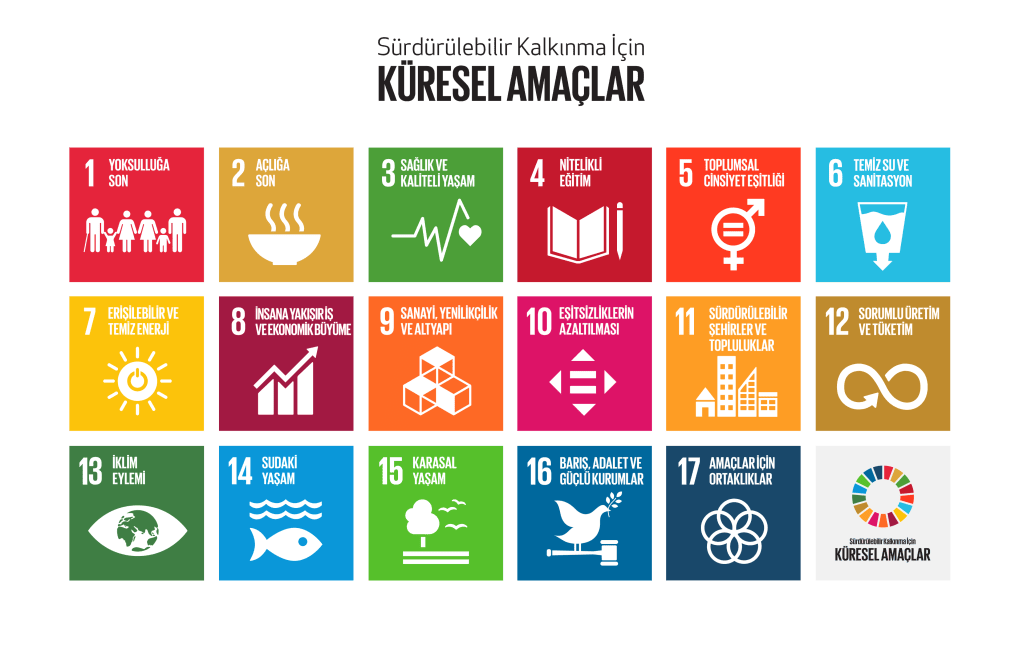
Of course, we must also see the brighter side of the coin: over the same period, around 1 billion people gained access to safe drinking water and 1.2 billion to safe sanitation. So the problem is not in setting goals; it is in translating them into national budgets, grids and industrial policies.
How aligned are countries with the UN’s goals?
On paper, everyone is aligned; just as the goals were set in 2015, signatures were put to “Transitioning Away from Fossil Fuels” at COP28 in Dubai in 2023. Yet the gap between the signatures given and investment decisions grows wider every year. The UN explains this regression by the climate crisis, slowing growth, rising debt, conflicts and weakening development aid. Seen from this angle, it is no coincidence that the issue that really divided countries in Antalya was energy security and the balance between economic growth and climate goals. In other words, the goals are global, but priorities are becoming ever more national. The deadlock in Antalya looks less like the cause of this divergence than its result.
The countries calling for an exit from coal today built their own prosperity by burning coal for decades. When the historical share of the US and Europe in the atmosphere is plain to see, is it fair to expect the same pace from countries at the start of their development path?
At this point we also need to take seriously an objection that is often raised: the countries calling for an exit from coal today built their own prosperity by burning coal for decades. When the historical share of the US and Europe in the atmosphere is plain to see, is it fair to expect the same pace from countries at the start of their development path? I think the question is justified, but the answer is not to carry on with coal. The counterpart of historical responsibility is to shoulder the bill for the transition: finance, technology and market access. That was also what was really missing in Antalya; while the fossil fuel sentence was being debated, the question of who would pay the price of that sentence once again remained on the table.
Have the COPs lost their function?
To answer “yes” to this question would be taking the easy way out. Nearly 200 countries seeking unanimity on a single sentence produces fewer and fewer results in today’s geopolitics. On the other hand, the funds and technical programmes continue to function.
There is one piece of data we should also acknowledge properly: when the Paris Agreement was adopted, existing policies pointed to warming of around 4°C by the end of the century; today the same projection stands at around 2.8°C. This is still an unacceptably high risk, and crossing the 1.5°C threshold is no longer a remote possibility. But we also have to concede that the curve has bent, and that these tables have had a share in that. The COPs may be turning from a political platform that sets direction into a platform for implementation and finance. Perhaps we need to adjust our expectations accordingly.
What falls to us?
For the wind sector, the conclusion is extremely clear: the voluntary support given to electrification by around 100 countries, although not a binding decision, shows the direction of demand. But electrification cannot be a goal in itself; unless it is addressed together with renewable installed capacity, storage and grid infrastructure, we will merely have shifted consumption to fossil-based electricity. The decision to grow installed capacity, grid investment and domestic industry, meanwhile, will be taken not in Antalya but in Ankara and in company boardrooms.
The decision to grow installed capacity, grid investment and domestic industry should be taken not in Antalya but in Ankara and in company boardrooms.
As Guterres reminded us at the close, the absence of consensus in the negotiating room does not make the science ambiguous. Eyes have already turned to COP32, to be held in Ethiopia in 2027; but do we have time to lose by waiting for the next summit, or the next accord, or the four years in which it is certain that we will not reach the Sustainable Development Goals?

References:
- COP31 ends without climate pact as UN chief warns there is ‘no ambiguity in the science’ — UN News, 22 November 2026
https://news.un.org/en/story/2026/11/1168855 - Antalya iklim zirvesi uzlaşmasız sonlandı! (in Turkish) — Ekonomi Gazetesi, 22 November 2026
https://www.ekonomigazetesi.com/ekonomi/antalya-iklim-zirvesi-uzlasmasiz-sonlandi-92786 - The Sustainable Development Goals Report 2026 — United Nations, 7 July 2026
https://unstats.un.org/sdgs/report/2026 - None of 17 UN SDGs on Track to Be Achieved By 2030, Report Finds (on the SDSN Sustainable Development Report 2026) — Earth.org
https://earth.org/?p=42625 - Güliz Öztürk, “BM Hedefleri” (in Turkish) — WIRED Türkiye, October–November–December 2026 issue, pp. 92–95
- Işık Tunçel, COP31 sona erdi: Dünyanın iklimle imtihanı ve geride kalan büyük soru (in Turkish) — Tourism Today, 23 November 2026
https://www.tourismtoday.net/turizm-haberleri/kose-yazilari/cop31-sona-erdi-dunyanin-iklimle-imtihani-ve-geride-kalan-buyuk-soru - Emissions Gap Report 2026: The Point of Return, press release — UNEP
https://www.unep.org/news-and-stories/press-release/new-unep-report-lays-out-emission-cuts-needed-return-15degc - Analysis: World’s biggest historic polluter – the US – is pulling out of UN climate treaty — Carbon Brief
https://www.carbonbrief.org/analysis-worlds-biggest-historic-polluter-the-us-is-pulling-out-of-un-climate-treaty/



Bir Cevap Yazın